



RE-USE

-
Build knowledge about reusing materials in circular projects
01 Feb 2025 -
Test reusing materials in real projects
31 Mar 2026 -
Create connections between businesses in the Meuse-Rhine region
31 Mar 2027 -
Measure the results and economic benefits
31 Jan 2028
A second life for old building materials
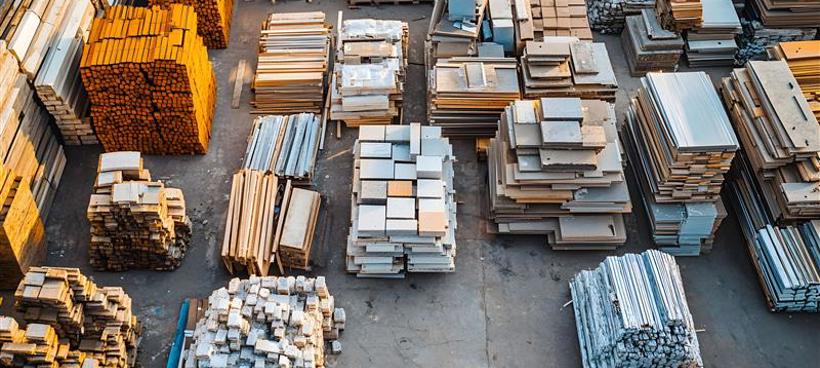
When a new building goes up, new raw materials are used. And when buildings come down, most of those materials are thrown away. It's a straight line: from creation to disposal. But it doesn't have to be this way. Many of these materials can be reused to create something new. Enter RE-USE: a project working towards circular construction in the Meuse-Rhine region.
RE-USE doesn't focus on waste. It sees buildings as a valuable source of materials. Still, turning old materials into new opportunities isn't simple. RE-USE tackles four big challenges: available data, complex legal rules, real-world construction issues, and a limited cooperation across borders. The project brings together universities, local governments, and businesses to solve these problems as a team.
Because the project works across borders, it also builds bridges between different laws, languages, and business models. This makes cross-border collaboration easier and helps the circular economy grow stronger.
As part of the project pilots will run in Liège, Aachen, Hasselt and Heerlen. Each one is different, showing how reuse can work in real buildings and real communities. These pilots are more than tests. They help develop tools, training, and new ways of working that can be used by small businesses, housing companies, and cities.
RE-USE creates long-term value too. All the knowledge, tools, and ideas will be stored and shared through the European Centre for Circular Building and Transformation. That means the impact will continue even after the project ends.

Group picture of the RE-USE partners
Where are we today? (April 2026)
The RE-USE project is gaining strong momentum, turning circular ambition into tangible action across the Euregio Meuse-Rhine.
Over the past period, the foundations for large-scale material reuse have been firmly established. A centralised Web GIS platform, designed by ULiège, now provides the technical backbone of the project. This innovative digital system transforms buildings into visible and measurable material resources, supporting smarter decisions across borders. Together with the “Quickscan to Deep Dive” approach, it guides teams from an initial scan to detailed material inventories in a clear, practical way.
But circular construction is about more than technology - it is about trust. UHasselt’s legal work addresses key questions around liability, quality, and responsibility, helping public authorities and businesses feel confident when working with reused materials. In parallel, ZUYD University’s Circular Portfolio Management framework supports cities and housing providers in embedding circular thinking into long-term investment and maintenance strategies - not as a one-off experiment, but as a new normal.
This progress is coming to life in real projects. In the Lindeman neighbourhood, the first typology scans have begun. In Heerlen, the former DSM building has entered its feasibility phase. The City of Aachen has selected two promising municipal sites, while CHU Liège has refined its project scope and is preparing detailed material inventories for its hospital pilot.
The focus now is on testing tools in practice and engaging SMEs and public developers through focus groups.
Valérie Wambersy from CHU de Liège talks about the CHU pilot in the video below.
Contact
Details
Target audience
Budgets
Our partners
-

PXL University of Applied Sciences and Arts
-

Hasselt University
-
Embuild Limburg
-

University of Liège
-
City Region of Parkstad Limburg
-

City of Aachen
-

European Centre for Circular Building and Transformation
-

Zuyd University of Applied Sciences
-

Living in Limburg
-

University Hospital of Liège
-

ALTBAU Plus
Our co-financers
-

Region Wallonia
-

Land NRW
-
Ministry of Economic Affairs